
Kang, Sophia
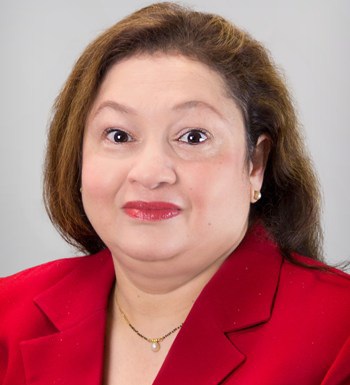
Sophia Kang
Read more
| Grant Category: | Fulbright Distinguished Awards in Teaching Research Program |
| Project Title: | Challenges to Intrinsic Motivation in the Classroom and How to Involve Community in Student-Driven Learning |
| Field of Study: | Education |
| Home Institution: | Multicultural High School Brooklyn, NY |
| Host Institution: | TBD, TBD, TBD |
| Grant Start Month: | September 2026 |
| Duration of Grant: | Six months |
Ms. Sophia Kang has been teaching English literature for the past eight years across the seventh to 12th grades. She is an advocate for culturally relevant teaching that connects students’ lived experiences to the classroom. She has collaborated with TED-Ed Student Talks to help students develop their inquiry skills, resulting in personalized projects, such as connecting local carcinogen levels to health or concussions to the longevity of football players. Committed to educational equity across marginalized communities, Ms. Kang has led professional development for 150 teachers around data collection, culturally relevant teaching, and interdisciplinary writing. She has also established a shared language for writing across subjects and has played a significant role in increasing her school’s English Language Arts performance level from red to green tier. In her research, she seeks to examine how schools with limited funding can implement innovative and systemic practices to increase student engagement, such as by fostering community connections and increasing ownership across all stakeholders. The ultimate goal of Ms. Kang’s research is to empower students, teachers, and communities to each become leaders of positive change, thereby building up schools as positive learning spaces. She received her BA in English from the University of California, Berkeley, in 2015 and her MA in education from the University of California, Los Angeles, in 2018.
Beyond the classroom, Ms. Kang has engaged with her local community and communities abroad – she has provided mentorship to unhoused youth on skid row and has created culturally relevant English lessons for the Ticuna tribe. She enjoys creative expressions such as poetry, ceramics, and film in her free time, which allows her to make unique connections to education.
Ms. Kang’s Fulbright research project is examining how under-resourced schools can implement innovative and systemic practices to close socio-economic achievement gaps and foster community connections. She aims to use her findings to boost student engagement by nurturing intrinsic motivation and meaningful learning experiences in her own school community.
Dambrino, Kristian
Kristian Dambrino
Read more
| Grant Category: | Fulbright Global Scholar Award |
| Project Title: | Reducing Global Mental Health Stigma through Nurse Capacity Enhancement in Indonesia and India |
| Field of Study: | Nursing |
| Home Institution: | Belmont University College of Nursing Nashville, TN |
| Host Institution: | Bangalore Baptist Hospital Society, Bengaluru, Karnataka |
| Grant Start Month: | December 2025 |
| Duration of Grant: | One and a half months |
Dr. Kristian Dambrino is an ANCC board-certified psychiatric nurse practitioner and founder of Dambrino Wellness, an evidence-based outpatient mental health clinic in Nashville, Tennessee. During her Doctor of Nursing Practice program, she studied the impact of high-deductible health insurance on mental health treatment through a retrospective analysis, exploring how cost transparency between the provider and patient can mitigate financial decision-making for patients accessing psychiatric care.
As a national speaker and psychopharmacology expert, Dr. Dambrino regularly delivers continuing medical education programs for Psych Congress, HMP Global, and conferences across the United States. Her academic contributions include authoring accredited graduate nursing courses in psychopharmacology, guest lecturing at Vanderbilt University, and holding adjunct appointments at Michigan State University and Marian University.
Dr. Dambrino is the creator of The Limbic Music, an R&B musical about neurotransmitters in mental health, which is currently in pre-production. She has also authored a masterclass in jazz vocal improvisation, delivering the six-hour curriculum completely in French in Caen, France, in May 2023. An accomplished vocalist, she performs at annual jazz concerts in France and has shared stages with Oprah Winfrey, Morgan Freeman, Jean Smart, Samuel L. Jackson, and Ray Romano. She has also been featured on U.S. national television – MSNBC, CNBC, and CMT – as an entertainer, and has released three original jazz albums, one of which was awarded the 2017 Mississippi Institute of Arts & Letters Award for Best Contemporary Music Composition.
Committed to service, Dr. Dambrino volunteers regularly with Rotary International, Project C.U.R.E., Habitat for Humanity, the National Alliance on Mental Illness, and the Nashville International Center for Empowerment. Recently, she produced a sold-out benefit concert, Music City Without Borders, raising $20,000 for refugee resettlement in Tennessee.
Dr. Dambrino’ s Fulbright-project is working on reducing mental health stigma among nurses and nursing students in Indonesia and India through a photovoice-enhanced intervention. Via participatory photography and workshops, the project participants are documenting and reflecting on their experiences with stigma. The goal is to strengthen mental health nursing capacity by building sustainable global partnerships.
Mazzanti, Jared
Jared Mazzanti
Read more
| Grant Category: | Fulbright Global Scholar Award |
| Project Title: | Deepening University Integration in Local and National Innovation Ecosystems |
| Field of Study: | Business |
| Home Institution: | University of California Berkeley, CA |
| Host Institution: | Indian Institute of Science, Bengaluru, Karnataka |
| Grant Start Month: | November 2025 |
| Duration of Grant: | One and a half months |
Mr. Jared Mazzanti currently serves as the director of Strategic Initiatives in the Dean’s Office at the University of California (UC), Berkeley School of Public Health, where he has designed and operationalized multiple programs focused on health innovation internationally and domestically. He spearheads a novel partnership with J.P. Morgan that brought a new healthcare conference to Asia, oversees a Health Innovation Accelerator for Taiwanese start-ups, and previously built a Social Impact Innovation Grant Program to provide student teams resources and training to effect positive change in their communities.
A Boren scholarship to China in 2009 ignited Mr. Mazzanti’s lifelong drive to build bridges between peoples and cultures, especially in Asia. He has launched and sustained multi-country partnerships in his previous roles at the Harvard T.H. Chan School of Public Health, Peking University’s Guanghua School of Management, UC Berkeley’s Office of the Chancellor, and the HNA Group in China.
Mr. Mazzanti received his BA in political economy with the distinction of magna cum laude from UC, where he concentrated in East Asia and minored in Chinese. He received his MBA in 2016 after completing a Chinese-taught program at Central South University (中南大学) in China’s Hunan province. He is an active member of UC Berkeley’s Innovation and Entrepreneurship Council, regularly volunteers for the Asia Society of Northern California, and maintains professional credentials in HR and project management.
Mr. Mazzanti’s Fulbright project is conducting a comparative analysis on how universities in India (Indian Institute of Science), Japan (Tohoku University), and South Korea (Seoul National University) are bridging the gap between invention and innovation, especially in health-related deep tech; this is to identify success stories and pain points, the latter preventing faster uptake of university research by industry. His research aims to answer one key question through surveys and stakeholder interviews: what factors best position a university to integrate into local and national innovation ecosystems and drive entrepreneurship among its faculty, students, staff, and alumni?
Zhang, Weidong
Weidong Zhang
Read more
| Grant Category: | Fulbright Global Scholar Award |
| Project Title: | China and the Global South: Contemporary Dynamics and Global Implications |
| Field of Study: | International Relations |
| Home Institution: | Winona State University Winona, MN |
| Host Institution: | Mahatma Gandhi University, Kottayam, Kerala |
| Grant Start Month: | January 2026 |
| Duration of Grant: | Two months |
Dr. Weidong Zhang is a professor in the Department of Global Studies and World Languages at Winona State University, Minnesota. He holds a doctorate in mass communications (with a cultural studies focus on media, culture, and society), and an MA in Asian studies/Asian civilizations, both from the University of Iowa. He was a research fellow at the Max Planck Institute for the Study of Religious and Ethnic Diversity in Göttingen, Germany, during 2014–2015. His research interests lie at the intersection of language and discourse, culture, and Chinese society. He has published in the International Journal of China Studies, the American Review of China Studies, the Journal of Asian Communication Research, and the Network and Communications Journal, among others. One important line of his work focuses on China’s role in the world, including China’s self-perception and its evolving foreign policy and the foreign policy discourse it has with the new world order and the Global South.
Dr. Zhang’s Fulbright project is part of a multi-country research aiming to provide a comprehensive yet nuanced analysis of China’s engagement with diverse regions within the Global South. Using case studies and fieldwork in India, Brazil, and South Africa, the project is investigating China’s diverse strategies in foreign policy, economic investments, and diplomatic initiatives in Asia, Africa, and Latin America. It is also assessing how nations in the Global South perceive and respond to China’s influence, highlighting regional variations in these interactions. This research addresses a critical gap in the understanding of China’s role in the Global South, a region that has often been overlooked in mainstream analyses of China’s foreign policy. By exploring the intersection of China’s strategic interests and the diverse priorities of the Global South nations, the study is attempting to offer a deeper understanding of how these evolving relationships are shaping global power dynamics, regional development, and geopolitical alignments. Additionally, it is examining the broader implications for global governance, peace, and security, to provide insights into the future of international relations and China’s role in the evolving global order.
Arumugam, Sankarasubramanian
Sankarasubramanian Arumugam
Read more
| Grant Category: | Fulbright-Kalam Fellowship |
| Project Title: | Utilizing Hydroclimate Information for FEWS Management in India: Opportunities and Challenges |
| Field of Study: | Engineering |
| Home Institution: | North Carolina State University Raleigh, NC |
| Host Institution: | Indian Institute of Science, Bengaluru, Karnataka |
| Grant Start Month: | January 2026 |
| Duration of Grant: | Six months |
Prof. Sankarasubramanian Arumugam is a faculty at North Carolina State University. His primary research interest lies in understanding, modeling, and forecasting large-scale hydroclimate information and utilizing that information for improved food, water, energy nexus. In this context, he has developed both physical and stochastic models in hydroclimatology, as well as stochastic optimization models for incorporating climate information into water, energy and crop-water management models. He received his PhD in water resources engineering from Tufts University in 2001. After that, he worked as a postdoctoral research scientist and as associate research scientist at Columbia University’s International Research Institute for Climate and Society. He has also worked as a consultant for the World Bank focusing on the role of environmental impact assessment in improving development projects.
Dr. Arumugam has published more than 120 refereed articles in various top-tier journals such as Water Resources Research, Earth’s Future, and Journal of Geophysical Research. He has mentored 9 postdoctoral scientists, 21 PhD students, and 5 MS students. He has served as the lead principal investigator for various interdisciplinary flagship initiatives of the National Science Foundation (NSF) on climate and sustainability. He has received the prestigious CAREER award from NSF. Dr. Arumugam has also led an AGU Chapman International Conference on seasonal hydroclimatic predictions and water management.
He is currently serving as an associate editor with Geophysical Research Letters and has served on the editorial board of publications like Water Resources Research and Journal of Hydrology. Apart from serving on several NSF panels, he was a panelist for the NAS workshop on utilizing water-use information. He has also led several workshops for the USGS Powell Center and the World Meteorological Organization.
Dr. Arumugam’s Fulbright-Kalam project is pursuing four key research activities: developing a national assessment of Food, Water and Energy Systems (FEWS) security; synthesizing opportunities and challenges to improve FEWS resilience under near-term climate change; capacity building of agencies on state-of-the-art models in FEWS research through workshops; and training next-gen scientists through short-term courses on utilizing hydroclimatic information for improving FEWS resilience.
Behura, Susanta
Susanta Behura
Read more
| Grant Category: | Fulbright-Kalam Fellowship |
| Project Title: | Advancing Genomics Research and Education on Climate-resilient Animal Agriculture in India |
| Field of Study: | Animal Science |
| Home Institution: | University of Missouri Columbia, MO |
| Host Institution: | Utkal University, Bhubaneswar, Odisha |
| Grant Start Month: | May 2026 |
| Duration of Grant: | Four months |
Dr. Susanta Behura is an assistant professor of computational biology and bioinformatics in the Division of Animal Sciences of the University of Missouri, Columbia. He has a BSc in mathematics, an MSc in biotechnology, and a PhD in life sciences. His postdoctoral training was at Purdue University and the University of Illinois Urbana-Champaign. He has a decade’s experience in animal health and reproduction research at the University of Missouri. His lab leverages multi-omics data using transcriptomics, epigenetics, metabolomics, proteomics, and single-cell genomics assays to perform data-intensive bioinformatics research in the areas of reproduction, development, and health.
Dr. Behura has a demonstratable track record of conducting research independently as well as collaboratively. He has published over 100 papers in peer-reviewed journals and these have been cited extensively. His current h-index is 37 and i10-index, 82. In the last five years, his lab has published several papers in Gene, Placenta, Cells, iScience, and FASEB J which have provided new insights into the role of placenta in the development of fetal brain in animals. Dr. Behura has also been actively involved in writing collaborative and independent grant proposals. At Missouri, he has developed and taught a graduate-level course, and has also mentored three graduate students and a senior research specialist.
A reviewer for many high-impact factor journals, Dr. Behura is an editorial board member of several journals such as Scientific Reports and Systems Biology in Reproductive Medicine. He has also served as a grant reviewer and panelist for agencies like the U.S. National Science Foundation, French National Research Agency, German Research Foundation, Wellcome Trust, U.S. Department of Agriculture, Israel’s Ministry of Science, Technology and Space, and Spain’s “la Caixa” Foundation.
Dr. Behura’s Fulbright-Kalam project is a combined teaching and research endeavor at Utkal University, India. His research project, called “Advancing Genomics Research and Education on Climate-resilient Animal Agriculture in India”, is studying epigenetic changes in the blood of dairy cows to understand how they cope with summer heat. The teaching component is providing students an overview of emerging applications of genomics in climate resilience research in animal agriculture.
Roy, Shouraseni
Shouraseni Roy
Read more
| Grant Category: | Fulbright-Kalam Fellowship |
| Project Title: | Exploring Climate Change Impacts and Community Resilience in the Indian Sundarban Delta |
| Field of Study: | Environmental Sciences |
| Home Institution: | University of Miami Coral Gables, FL |
| Host Institution: | Indian Institute of Technology-Kharagpur, Kharagpur, West Bengal |
| Grant Start Month: | January 2026 |
| Duration of Grant: | Four months |
Prof. Shouraseni Roy is a professor in the Department of Geography and Sustainable Development at the University of Miami. Her research centers on long-term climate trends and their societal impacts, with a particular focus on the intersections of climate change, health, and gender in the Global South. Over the past two decades, she has gained national and international recognition for her contributions to climate science, which reflects in her selection as a contributor to the Intergovernmental Panel on Climate Change (IPCC) reports.
Her methodological research approach emphasizes spatial analysis using GIS, remote sensing, and climate data. She analyzes field data, satellite imagery, and both gridded and station-level data sets to identify urban heat island trends in cities like New Delhi, Belize, and Beijing. Her research has been published in leading journals like the International Journal of Climatology, Journal of Applied Meteorology and Climatology, and Journal of Geophysical Research: Atmospheres. As a recognized expert on Indian climate, she has also contributed an entry on Monsoons to the Encyclopedia of Geography published by the American Association of Geographers (AAG). Several of her publications on long-term climate change have been cited in IPCC reports. Prof. Roy was also selected as an AAG delegate to attend the UNFCCC’s Conference of Parties (COP) meetings in Lima and Paris. Earlier, she had conducted a Fulbright study in India on the long-term impact of urbanization on groundwater levels in Delhi and Mumbai.
Besides her climate-related research, Prof. Roy has actively engaged in projects that examine urban processes using big data and geospatial analysis. Her recent work in Miami, conducted in collaboration with students and faculty, explored spatial patterns of crime, traffic accidents, and vulnerability to sea-level rise.
Prof. Roy’s Fulbright-Kalam project is documenting the localized impacts of climate change in the Sundarban Delta through comprehensive spatial analysis and fieldwork. The study is assessing shoreline changes, subsidence, and local adaptation responses in order to provide critical insights for policymakers and local communities. The results will be shared with local stakeholders and used to develop a knowledge hub dashboard for collaborations.