
Mahajan, Supriya
Supriya Mahajan
Read more

| Grant Category: | Fulbright Global Scholar Award |
| Project Title: | Evaluating Microbial Communities and Water Quality for Sustainable Restoration of Aquatic Systems |
| Field of Study: | Public Health |
| Home Institution: | University at Buffalo Buffalo, NY |
| Host Institution: | Indian Institute of Technology - Bombay, Mumbai, Maharashtra |
| Grant Start Month: | January 2027 |
| Duration of Grant: | Two months |
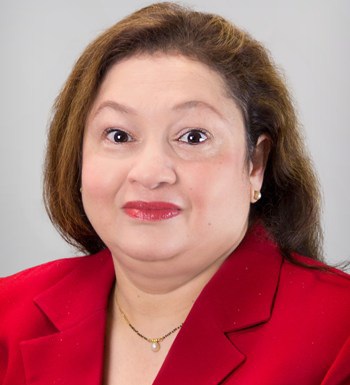
Dr. Supriya Mahajan is an associate professor (with tenure) in the Department of Medicine, Division of Allergy, Immunology and Rheumatology, at Jacobs School of Medicine and Biomedical Sciences, University at Buffalo (UB), New York. She also holds adjunct appointments in biomedical informatics and chemical and biological engineering and serves as director of research for the Division of Allergy, Immunology and Rheumatology. Dr. Mahajan earned her PhD in endocrinology and metabolism from the All India Institute of Medical Sciences (AIIMS), New Delhi, and later completed her MPH in global health and epidemiology from the University at Buffalo. She completed her postdoctoral training at Case Western Reserve University and UB, specializing in endocrinology, metabolism, immunology, and translational biomedical research. Over the course of more than three decades, Dr. Mahajan has developed an internationally recognized research program spanning immunology, neuroinflammation, microbiome science, infectious diseases, nanomedicine, public health, and translational medicine. Her work focuses on understanding microbial communities, inflammation, immune dysfunction, and chronic diseases, with particular emphasis on HIV-associated comorbidities, neurodegenerative disorders, and precision medicine approaches. She has served as principal investigator, coinvestigator, and mentor on numerous NIH research projects and has contributed extensively to interdisciplinary collaborations across the United States and internationally.
Dr. Mahajan has authored more than 150 peer-reviewed publications, nine book chapters, over 95 scientific abstracts, and holds a U.S. patent. Her scholarly contributions have garnered more than 9,400 citations, with an h-index of 52. She has served on numerous NIH, NSF, and the U.S. Department of Defense review panels and is an active member of several professional societies. A dedicated educator and mentor, she teaches graduate-level courses in microbiome informatics, metagenomics informatics, and public health informatics. Her current interests include microbiome-host interactions, neuroinflammation, precision public health, bioinformatics, global health, and the development of innovative technologies for disease detection, prevention, and treatment.
Dr. Mahajan’s Fulbright Global Scholar project is advancing international collaboration to address global water challenges through AI‑driven analysis of chemical and microbial data. As the principal investigator, she is leading a multidisciplinary team in partnership with IIT Bombay, the University of Sydney, and the University of the Western Cape to develop and field‑test an integrated optics-based automated water‑quality sensing platform across diverse sites in India, Australia, and South Africa. The project aims to strengthen global academic partnerships, build research capacity, and deliver a scalable real‑time monitoring framework to inform water‑safety policies and enhance infrastructure resilience worldwide.
McNulty, Stephanie
Stephanie McNulty
Read more
| Grant Category: | Fulbright Global Scholar Award |
| Project Title: | Reclaiming Participatory Democracy: Past and Present |
| Field of Study: | Political Science |
| Home Institution: | Franklin & Marshall College Lancaster, PA |
| Host Institution: | Institute for Social and Economic Change, Bengaluru, Karnataka |
| Grant Start Month: | June 2027 |
| Duration of Grant: | Two months |
Dr. Stephanie McNulty, the Honorable John C. and Katherine Kunkel Professor of Government at Franklin & Marshall College, is the author of several books about decentralization and citizen engagement, and the coauthor of The Power and Perils of Participatory Democracy: Participatory Budgeting and Democracy in Peru (Oxford University Press, 2026). Her work has also been published in scholarly journals such as Comparative Political Studies, Latin American Politics and Society, the Journal of Development Studies, Revista de Ciencia Política, Current History, and the Journal of Public Deliberation, among other outlets. Her research has been funded by the National Science Foundation, Fulbright, the American Association of University Women, the Hewlett Foundation, and the American Political Science Association. At Franklin & Marshall College, she teaches courses on global democracy and participatory politics.
Dr. McNulty’s Fulbright Global Scholar project is challenging the prevailing narrative that democracy is dying. While representative democracy (legislatures, courts, etc.) may be struggling, the project argues that participatory democracy, where ordinary citizens engage in direct decision-making, is expanding globally. It also seeks to correct the record by documenting both the ancient roots and modern expansions of these practices. As part of the project, she is conducting research in Greece, India, and Peru to document forms of participatory democracy that are largely absent from the historical records. In India, she is documenting the gram sabha (village assembly) structure, which may predate Athenian democracy and is currently practiced in around 250,000 villages.
Miller, Nathan
Nathan Miller
Read more
| Grant Category: | Fulbright Global Scholar Award |
| Project Title: | Pioneers at the Last Mile: Best Practices for AI-Enabled Community Health Worker Programs |
| Field of Study: | Public Health |
| Home Institution: | At-Large Washington, D.C. |
| Host Institution: | International Institute of Information Technology (IIIT) Hyderabad, Hyderabad, Telangana |
| Grant Start Month: | September 2026 |
| Duration of Grant: | Two months |
Dr. Nate Miller is a global health researcher and advisor with over 20 years of experience designing, implementing, and evaluating community health programs across Africa, Asia, and the Middle East. He holds a PhD in international health from Johns Hopkins University and master’s degrees in public health and international affairs from Columbia University.
At UNICEF, where he served as global lead for community health in emergencies from 2014 to 2024, Dr. Miller led an eight-country research initiative documenting how community health workers function in humanitarian settings, generating evidence that has informed global humanitarian health policy and practice. He also led the development of South Sudan’s national community health strategy, the Boma Health Initiative, now serving eight million people, and developed Somalia’s national community health worker program guidelines for the World Bank. He has held research and faculty roles at Johns Hopkins University and Columbia University, and has worked with Save the Children, USAID, and WHO. He is the author of 24 peer-reviewed publications on community health systems, implementation science, and health in humanitarian settings, including a 2026 paper in the Lancet Primary Care on building community health worker systems ready for AI integration.
For the past two years, Dr. Miller has focused on practical AI applications in global health, advising and training organizations, including WHO, Georgetown University, and George Washington University. He founded The AI & Global Health Hub, a resource platform for global health professionals, and is leading a literature review on AI in community health worker programs.
Dr. Miller’s Fulbright Global Scholar project is a five-month comparative study across Kenya, Rwanda, and India, three countries at the forefront of integrating AI into community health worker programs. Through direct observation of health workers using AI tools, key informant interviews with those who design and run these health worker programs, and stakeholder workshops, he is documenting which implementation practices transfer across health systems and which require local adaptation, with the aim to produce open-access guidance for program managers and policymakers worldwide.